Characterizing deficits in early-stage autophagy and lipid accumulation in iPSC-derived fibroblasts and keratinocytes from individuals with recessive dystrophic epidermolysis bullosa

University of Colorado Anschutz Medical Campus
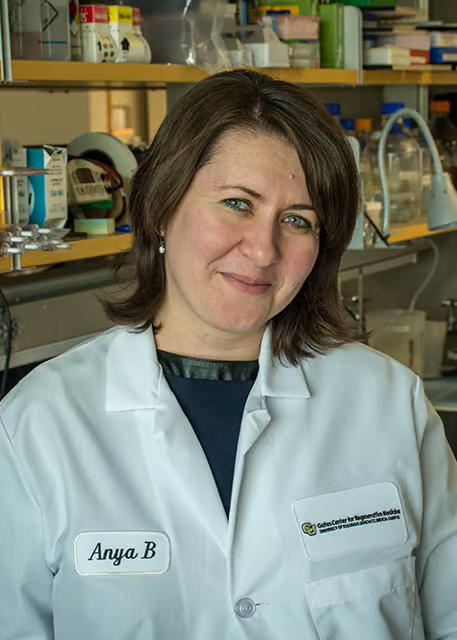
University of Colorado Anschutz Medical Campus
Overview:
Recessive dystrophic epidermolysis bullosa (RDEB) is a recessive congenital skin disease caused by mutations in the COL7A1 gene, which is the blueprint for the protein, type VII collagen (COL7A1). Skin cells generated in the lab from individuals living with RDEB, including fibroblasts and keratinocytes, display deficits in critical cellular functions such as autophagy. Autophagy is a process used by the cell to recycle damaged components. Interestingly, our lab has observed that COL7A1 deficiency leads to impaired autophagy. The goal of this proposal is to characterize COL7A1 in these functions and reveal therapeutic targets that can be modulated to treat major causes of morbidity and mortality in RDEB including wounding, itching, and the development of cutaneous squamous cell carcinoma.
Status:
This was funded through a 2025 PeDRA Research Fellowship Grant.